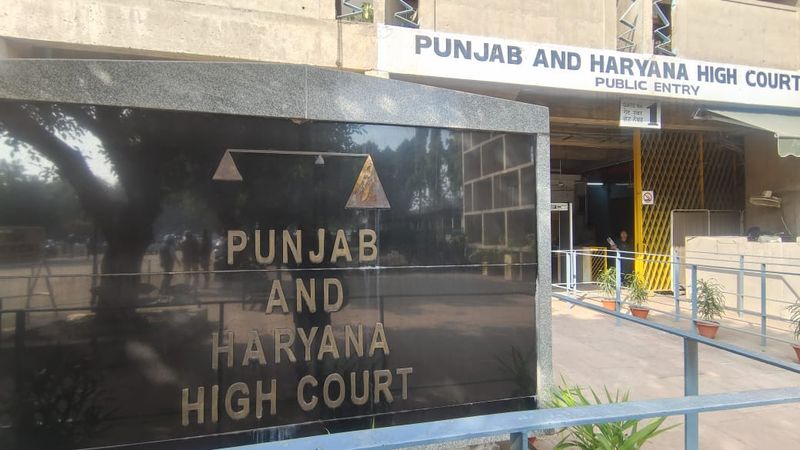
P&H: Grants Bail In NDPS Case as petitioner was arrested on discolure statement of co-accused

punjab-haryana
⚖️ Order Date: 01 May 2026
Headnotes

(1) Bharatiya Nagarik Suraksha Sanhita, 2023, Section 483, Narcotic Drugs and Psychotropic Substances Act, 1985, Sections 21, 27-A, 29, 61, 85, 37 — Regular bail — Petitioner was not present at the spot and no recovery was effected from him - Prosecution acknowledged that apart from the disclosure statement of the co-accused there is no material to connect the petitioner with the recovered contraband - Solitary disclosure is insufficient to justify further incarceration since its veracity is a matter for trial - Bail granted  [Paras 9 and 10]

(3) Bharatiya Nagarik Suraksha Sanhita, 2023, Section 483, Narcotic Drugs and Psychotropic Substances Act, 1985, Sections 21, 27-A, 29, 61, 85, 37, Constitution of India, Article 21 — Bail - Petitioner arrested on disclosure statement of the co-accused — Petitioner in custody for more than five months with investigation still in progress and trial likely to take time - Continued detention would be violative of Article 21. [Paras 10 and 11]

(4) Bharatiya Nagarik Suraksha Sanhita, 2023, Section 483, Narcotic Drugs and Psychotropic Substances Act, 1985, Sections 21, 27-A, 29, 61, 85, 37 — Bail — Criminal antecedents — Bail cannot be rejected solely on the ground of involvement in other case or cases - Court must evaluate the role of the accused in the case at hand and other relevant circumstances - Bail granted. [Para 12]


Facts of the Case

P&H: Grants Bail In NDPS Case as petitioner was arrested on discolure statement of co-accused

The Punjab and Haryana High Court has granted regular bail to petitioner in an NDPS case, noting that he was implicated only on the basis of a co-accused’s disclosure statement and there was no other material linking him to the contraband.

The FIR was registered for offences under Sections 21, 27-A, 29, 61 and 85 of the NDPS Act at Police Station Jandiala, Amritsar Rural. The police had recovered 9.50 grams of heroin and Rs. 1,000 from co-accused. The petitioner was not present at the spot and was later named on the co-accused’s statement. He has been in custody since November 14, 2025. The State opposed bail, citing the seriousness of the offence and his alleged involvement in other cases.

In court, the State conceded that apart from the disclosure statement, there was “nothing else to connect the petitioner with the recovered contraband.” Relying on the Supreme Court’s rulings in Tofan Singh (2020) and Najmunisha (2024), the High Court reiterated that confessional statements to NDPS officers are hit by Section 25 of the Evidence Act and a statement under Section 67 of the NDPS Act cannot be used as a confessional statement.

The Court also referred to Vijay Singh v. State of Haryana (2023), where the Supreme Court granted bail when the accused was only named by a co-accused and there was no other material. Applying the same reasoning, the High Court held that a bare disclosure statement cannot be the sole ground to deny bail.

Emphasising Article 21, the Court cited Dataram Singh (2018) to underline that “bail is the rule and jail is the exception,” and that keeping an undertrial in custody for an indefinite period infringes the right to life and personal liberty. It further relied on Maulana Mohd. Amir Rashadi (2012) to hold that bail cannot be refused solely because of criminal antecedents; the role of the accused in the present case is decisive.

Allowing the petition under Section 483 of the Bharatiya Nagarik Suraksha Sanhita, the Court ordered release on bail upon furnishing bonds to the satisfaction of the trial court, clarifying that no opinion was expressed on the merits of the case.

Quick Info
⚖️ Court punjab haryana
• Open Full Judgment •
